The Egg Tempera Painting Technique.
Painting Techniques of the Renaissance.
The egg tempera painting technique was the main method of applying paint to panel throughout the early Renaissance. As the title suggests the pigment is mixed with egg, using the white of the egg or the yolk results in different effects, the mixture is fast drying and permanent.
Tempera has been discovered on early Egyptian decorations and the painting technique was also used throughout the Byzantine period. Typically a wooden panel was prepared by covering the surface with layers of gesso (made with gypsum mixed with animal glue and worked into a thick paste). A rough layer was applied, the gesso grosso, the panel would then be finished in a smooth covering of gesso, the gesso sottile.
Any joints or knots in the wood had to be sealed with strips of linen or sized to ensure that the gypsum adhered to the surface of the panel. The final gesso surface is then polished to the smooth, brilliant white consistency required for the application of the paint.
Typically, an artist would transfer a drawing (cartoon) to the surface using the pouncing method. This is the technique of puncturing holes into the lines of the drawing, the paper was then laid onto the gesso ground and dusted with charcoal powder. The charcoal penetrated through the holes leaving a series of dots on the gesso. From this, the artist was able to outline the final composition of the painting. The same method was also used in the fresco painting technique, but the drawing would be transferred to the plaster wall.

A wooden panel is sealed with size or strips of linen to cover any joints or knots in the wood.
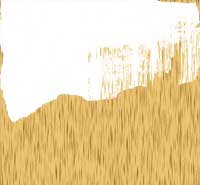
The panel is coated with layers of gesso, up to eight coats may be applied.
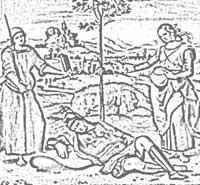
The artist would typically outline the composition using the pouncing method and then the design would be defined in paint.
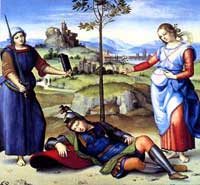
AND... the completed work
This is Raphael's
A Knights dream.
Pigments were ground on a slab and the egg was added only when they were used. Egg Tempera can only be laid in thin layers and has an amazingly fast drying time, so a tempera painting cannot achieve the depth of finish available to an artist working in oil paint.
Oil paint tends to yellow with age and the colours can darken and become transparent. One advantage of tempera is that the colour does not change over time, however, the Tempera artist must display a great deal of discipline and be methodical in the application of the technique. Tempera artists displayed an intimate understanding of all the materials used, and pride in the technique was passed from master to pupil throughout the generations.
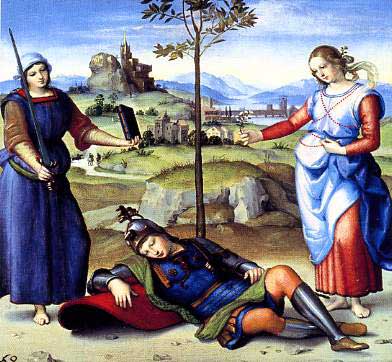 Raphael, A Knights Dream. c.1504.
Tempera on wood. National Gallery London.
Raphael, A Knights Dream. c.1504.
Tempera on wood. National Gallery London.(Note: - This is intended as a general illustration of the Egg Tempera method. It is not suggested that Raphael followed these exact stages when constructing this painting.)
- Home
- Egg Tempera

Contact Details. Site Map. Site Author. Art Museums. Privacy Policy. News.
© Copyright, 2008-2024, by Vincent Finnan, Italian-Renaissance-Art.com