Andrea del Verrocchio.
and his florentine workshop.
Born in Florence in 1435 Andrea del Verrocchio trained as a goldsmith. He was multi-talented and, in addition to his metalworking prowess, was very proficient in the skills of painting and sculpture. He established his own workshop which became extremely popular with the Medici, those great patrons of Italian art. Andrea, his pupils, and assistants, managed a large workload of multiple commissions.
Many of Andrea's pupils became famous artists and included; Leonardo da Vinci, Pietro Perugino, Domenico Ghirlandaio, and Lorenzo de Credi.
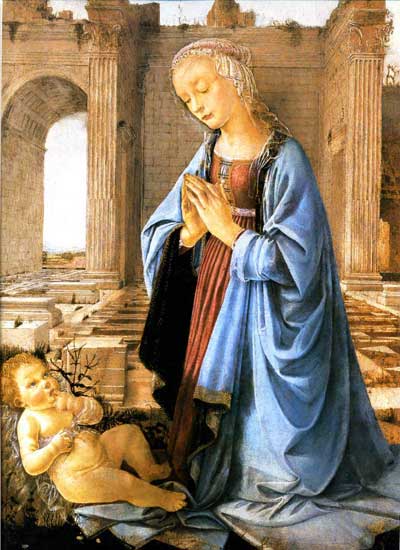
Painted in c. 1469, of all Verrocchio's paintings the Madonna and Child is my personal favourite. The work was once owned by the 19th-century art critic John Ruskin, hence the secondary title. Speculation about the attribution to Verrocchio has raged for many years, possibly because of his many talented pupils. It could prove to be the product of his workshop with involvement by the hand of the master himself.
The artists use of perspective is evident in this picture. Look how well he has painted the architecture, with the ground receding to a vanishing point somewhere beyond the wall in the background. Also, the arch gives a tantalising glimmer of the open space in the distance. A beautifully composed work.
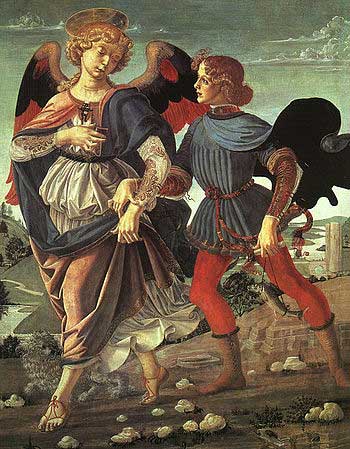
Tobias and the Angel have been attributed to Verrocchio's workshop so how much is by the master himself and which parts are painted by his pupils is a matter of opinion. Certainly, Leonardo da Vinci may have painted some of the details such as the fish or the dog.
Personal Opinion:- Vasari famously states that Andrea considered that Leonardo’s painting skills had surpassed his own and he vowed never to paint again. Given Vasari' s tendency to add romantic stories to his historical content, it seems unlikely that this version of events has any basis in fact. It is more likely that Verrocchio had such a wealth of talent in his studio that he was able to concentrate on sculpture while confidently leaving the painting commissions to his gifted pupils.
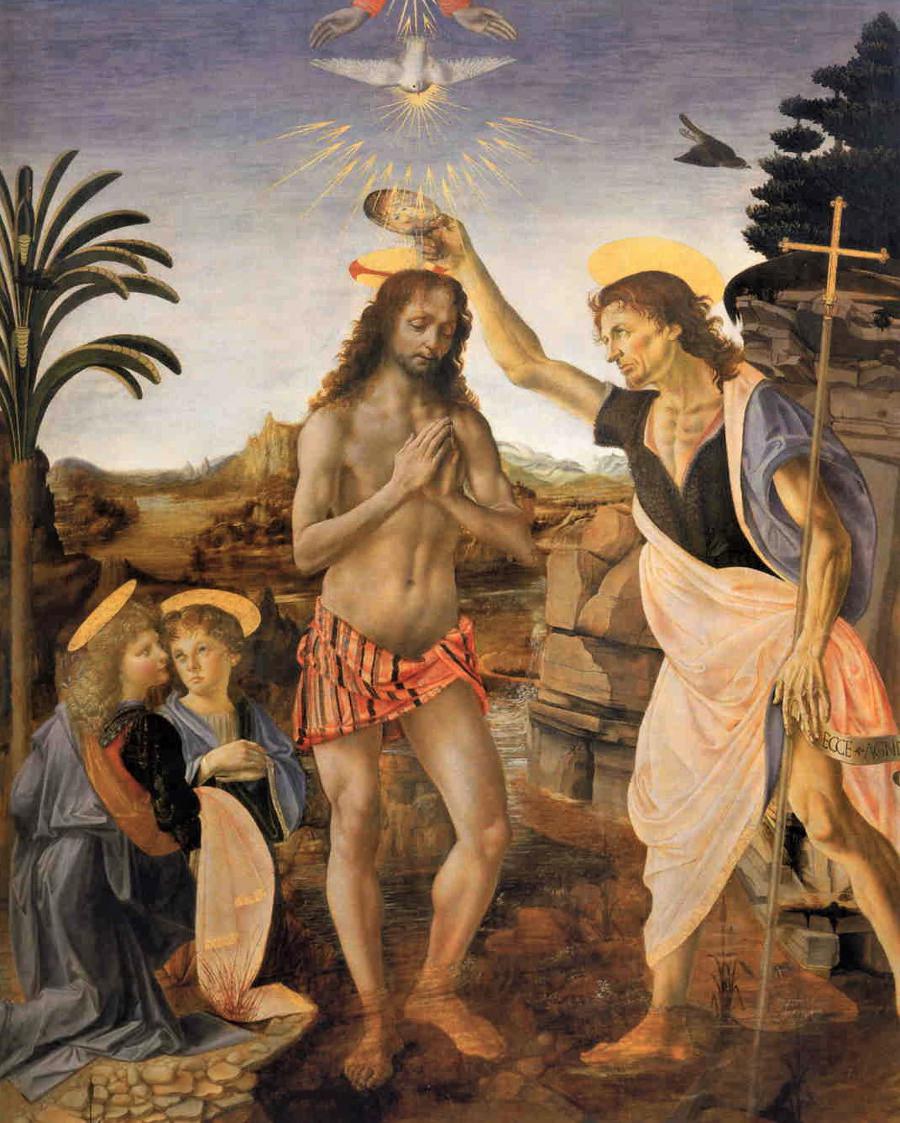
The Baptism of Christ.
Andrea's Baptism of Christ, painted in 1474-1475, is famous because his chief assistant on the work was none other than Leonardo da Vinci. Da Vinci completed the background and the angel on the left of the picture
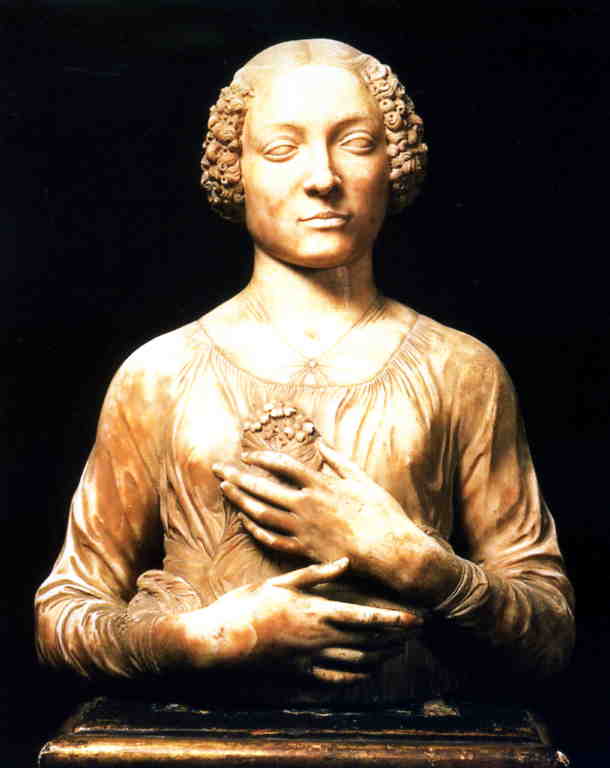
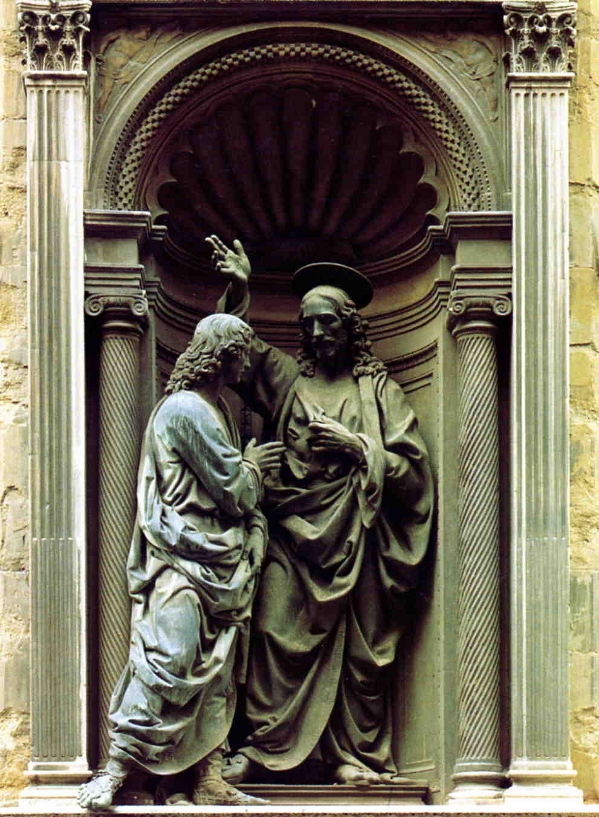
It has been suggested that Verrocchio’s pupil, Leonardo da Vinci may have had a hand in creating The Lady with the Primroses. Although no sculptures by Leonardo are known to survive some point to similarities between this and some of Leonardo’s female portraits.
Andrea del Verrocchio's statue of David.
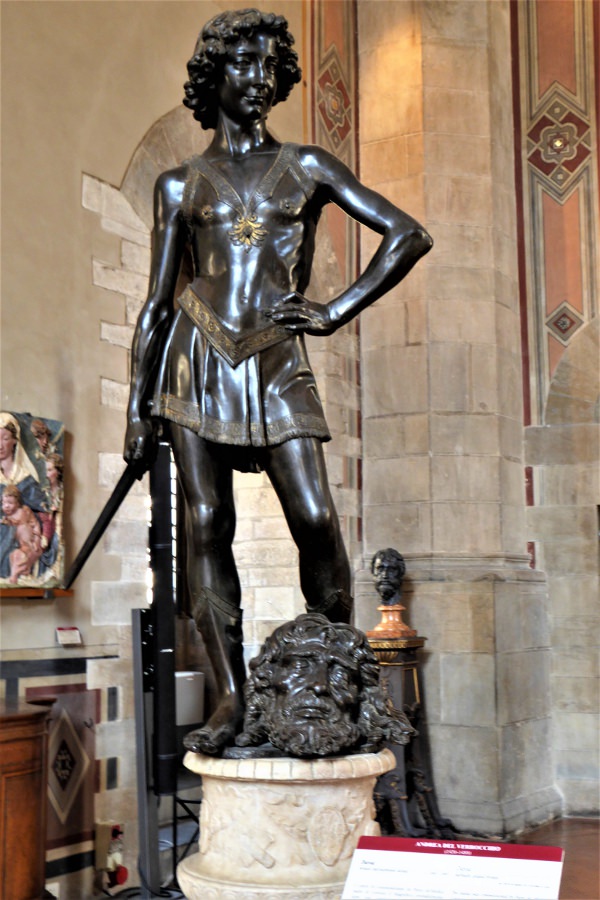
Between 1473 and 1475 Andrea executed a bronze statue of the young David, depicted holding a sword with the head of the slain Goliath at his feet. Popular legend claims that the model for this work is Andrea's pupil Leonardo da Vinci.
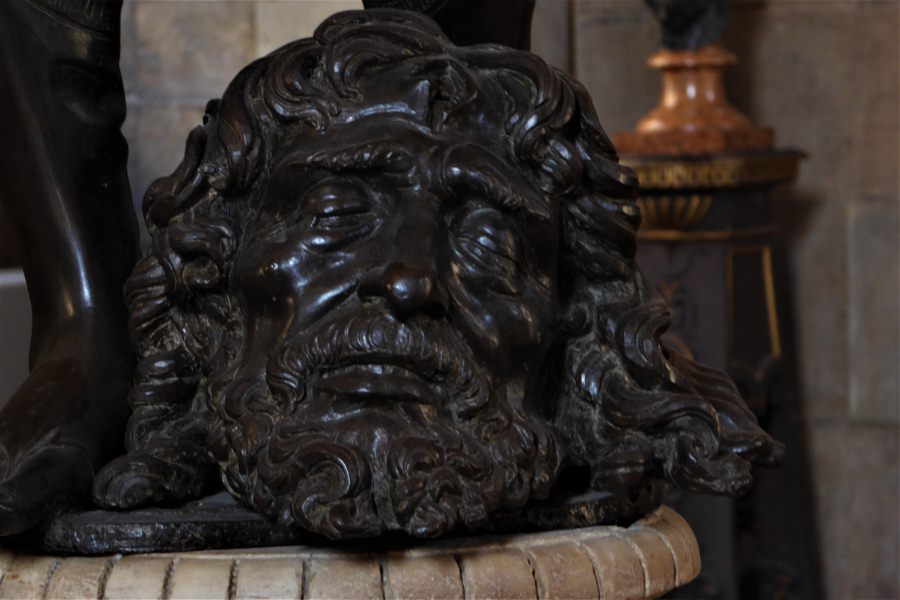
Andrea's wonderful carving skills are apparent in this close-up of the severed head of the giant Goliath.
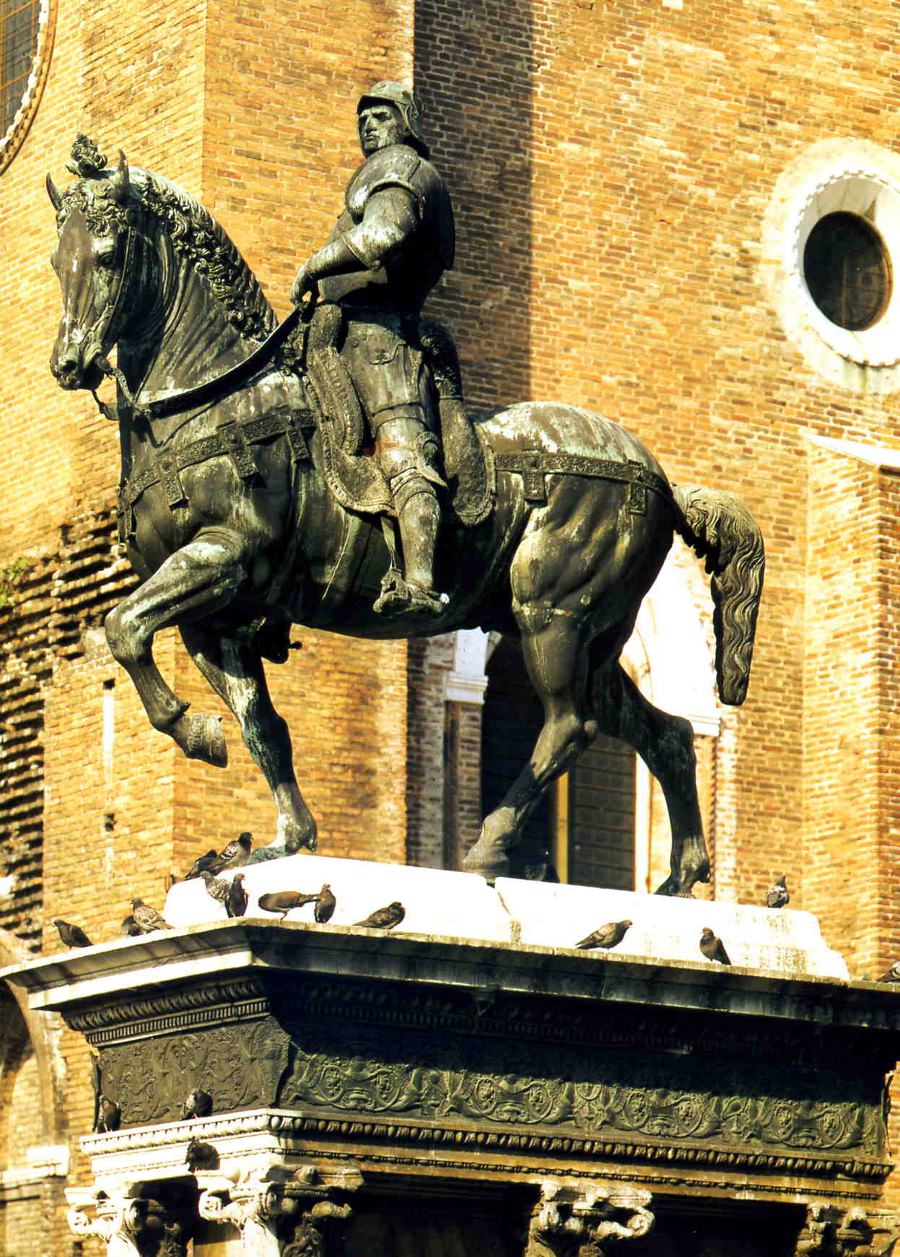
Bartolomeo Colleoni.
The equestrian statue of Bartolomeo Colleoni is Verrocchio's most famous work and was commissioned by the Republic of Venice in 1478. The artist submitted a wax model of the work in 1488 and he moved to Venice to oversee the casting of the statue.
Verrocchio has placed the general in a bold upright pose. Both the horse and the face of Colleoni have been studied in minute detail and the strong facial details add to the air of grandeur that permeates the piece. Colleoni was a general who led the Venetian army, looking at Verrocchio’s statue one can imagine the general proudly leading his men into battle. Verrocchio fell ill and unfortunately did not get to see this famous statue; he died in 1488 before the work could be finished.
Terracotta Angels.
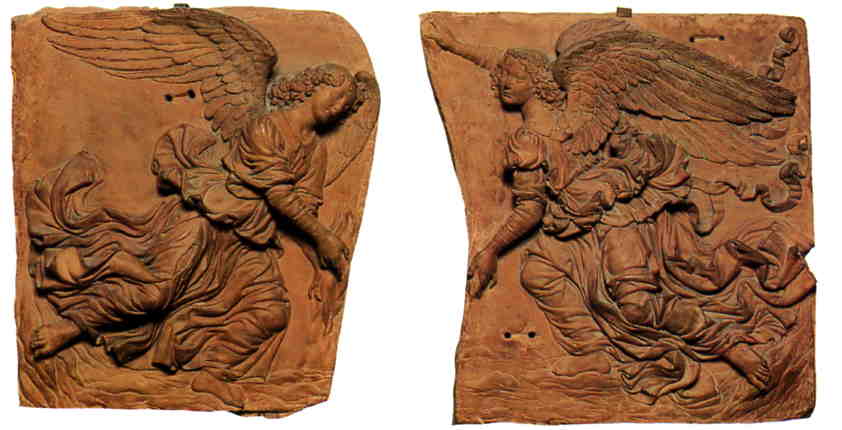


Verrocchio was the master to many important pupils it is not too surprising that many of his works can be difficult to authenticate. His most famous apprentice was of course Leonardo da Vinci and because Leonardo is the most famous artist on the planet – and the most lucrative - finding works that Leonardo may have had a hand in creating is very tempting indeed.
Such is the case concerning Verrocchio’s Terracotta Angels. The clamour to attribute a work to Da Vinci, if proven, can be extremely financially rewarding and so the desperation to find a sculpture by Leonardo’s hand continues unabated. The Terracotta Angels remain as a sculpture by Andrea del Verrocchio.
An artist who has been overshadowed by his famous pupil, Leonardo da Vinci, Andrea del Verrocchio is one of the most influential figures of the Italian Renaissance. His influence on the generation of artists who followed him cannot be underestimated and he deserves his place at the high table of art history.
- Home
- Andrea del Verrocchio

Contact Details. Site Map. Site Author. Art Museums. Privacy Policy. News.
© Copyright, 2008-2025, by Vincent Finnan, Italian-Renaissance-Art.com