Athene and the Centaur.
The Triumph of Chastity over Lust.
Athene and the Centaur hung in the city palace of Lorenzo di Pierfrancesco in the same room as Primavera. It is a related piece with both paintings themed on Mythological symbolism. Athene - often given the descriptive title Pallas Athena - is the Greek Goddess of wisdom and warfare, the Goddess Minerva is the Roman equivalent with both Ancient Goddess’ sharing the owl as their sacred animal.
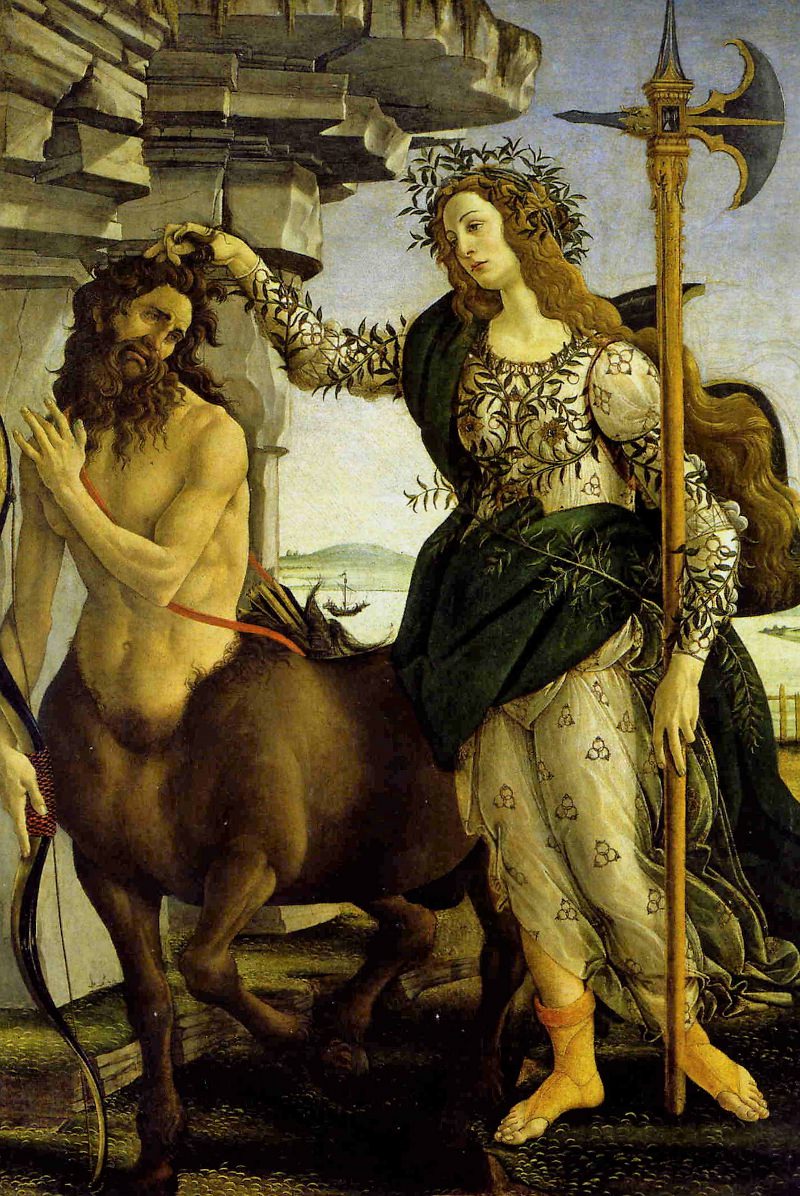
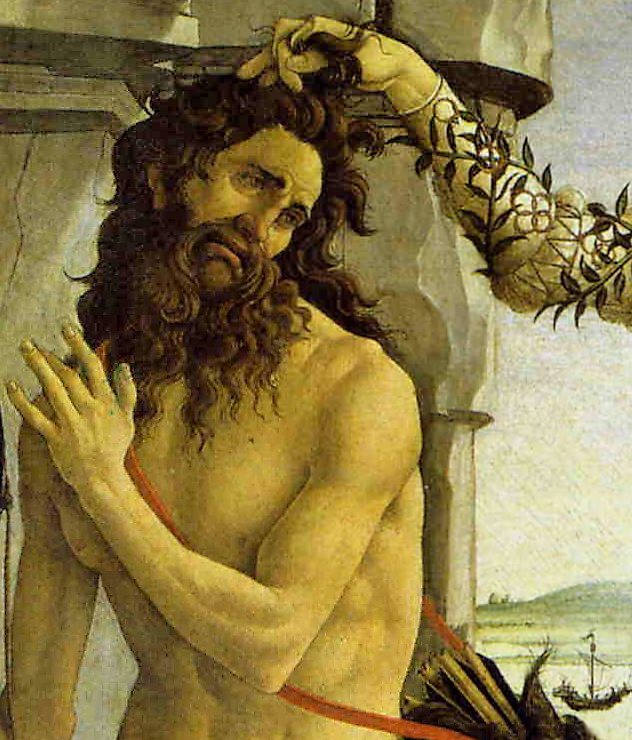
The half-man half-horse centaur satisfies his lust by hunting nymphs in the forest, he has strayed into forbidden territory and is in the process of stringing his bow in preparation for the hunt. Pallas Athene has surprised him, grasping his hair with a twisting motion causing him to grimace in pain, she carries a halberd suggesting that she is the guardian of the land that the centaur has strayed into.
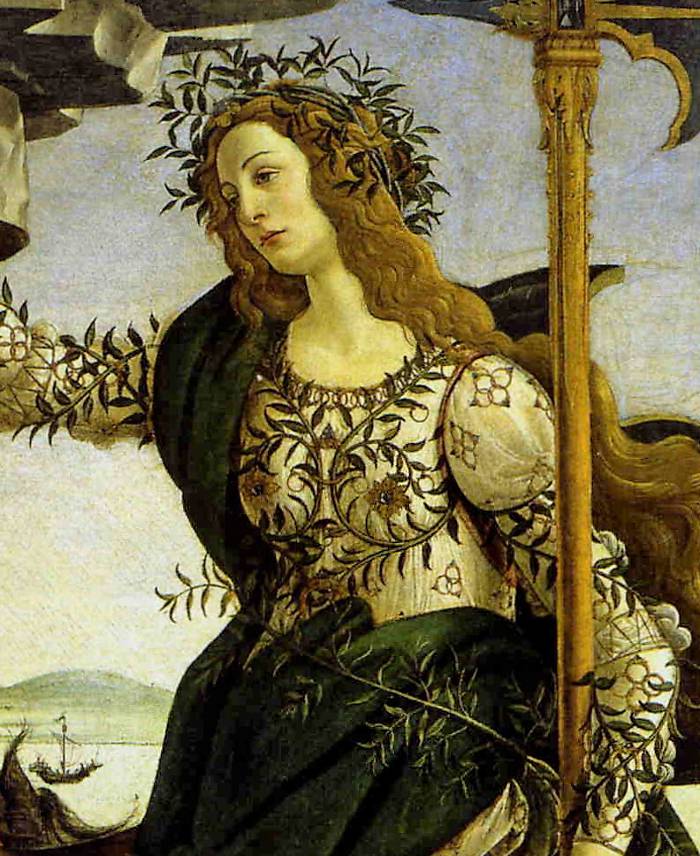
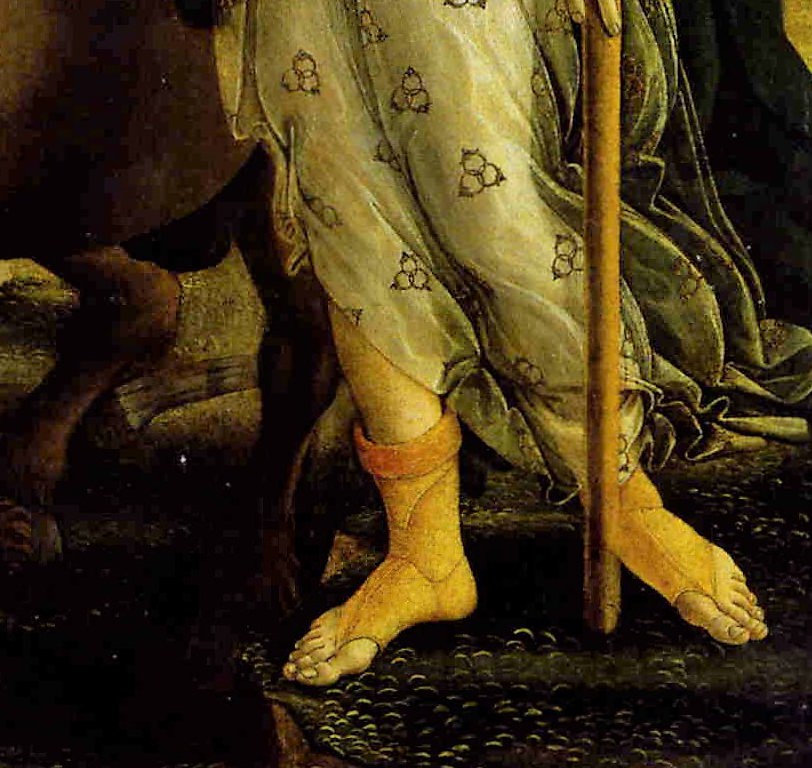
Botticelli has included the three interlocking rings emblem of the Medici family as a decorative element on the clothing of the Goddess of wisdom, it is yet another indication that this painting was indeed intended for the Medici family. Athene has the branches of the olive tree twisted around her arms and body (the olive tree is a sacred symbol for the Goddess of Wisdom), and the halberd represents the lance another symbol associated with the Goddess.
Botticelli’s painting represents the victory of chastity, Athene, over lust, the centaur. Sandro Botticelli's Mythological series of paintings - Primavera, The Birth of Venus, Venus and Mars and Pallas and the Centaur are the basis of his present-day popularity.
- Home
- Sandro Botticelli
- Athene and the Centaur

Contact Details. Site Map. Site Author. Art Museums. Privacy Policy. News.
© Copyright, 2008-2025, by Vincent Finnan, Italian-Renaissance-Art.com