Raphael Sanzio.
High Renaissance Painter and Architect.
Raphael Sanzio.
High Renaissance Painter and Architect.
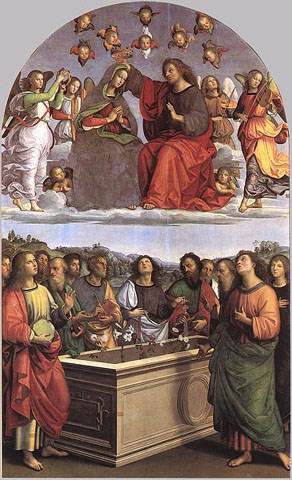
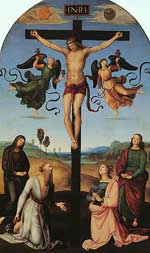
Raphael Sanzio was born in 1483 in the province of Umbria and received provincial training in the workshop of Pietro Perugino. At the age of seventeen, he proved himself to be one of the most promising of the younger painters but was still much influenced by Perugino's work. This can be seen in his early painting "Assumption and Coronation of the Virgin" and in "The Crucifixion" now in the National Gallery, London. Both paintings were completed when the artist was about twenty.
This is a condensed account of the artist's life, to read the full version go to Raphael's Biography.
Arriving in Florence the young artist soon realised the limitations of his apprenticeship in Umbria. He was faced with the daunting challenge presented by the work of Leonardo and Michelangelo and set out to study and learn from their paintings and sculptures. Raphael lacked the depth of knowledge of a Leonardo and could not match Michelangelo's power, he was a likeable and even-tempered artist, virtues that made him a favourite with potential patrons.
His two great predecessors and rivals could both be difficult to get on with and proved to be unpredictable when carrying out their commissions, and so Raphael was able to compete despite the reputations of the two great masters.
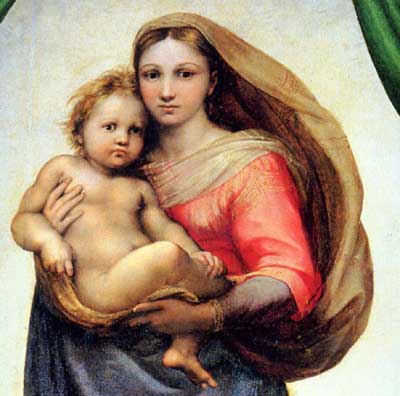
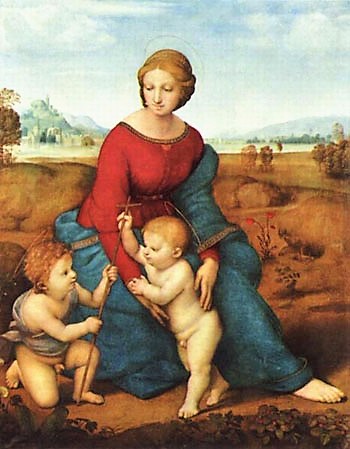
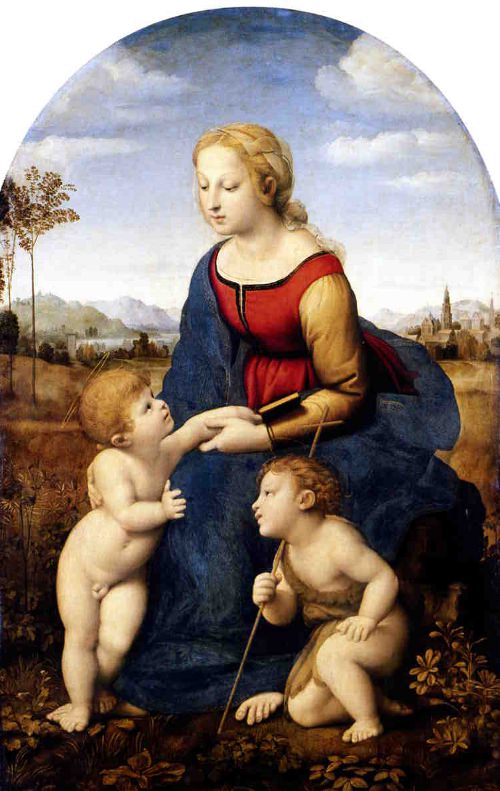
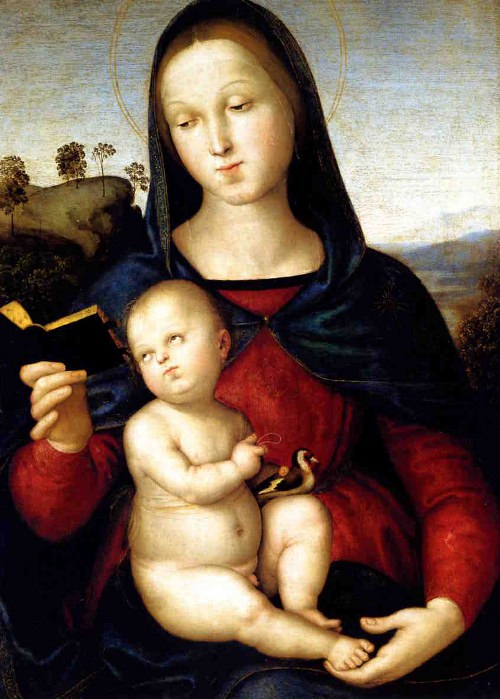
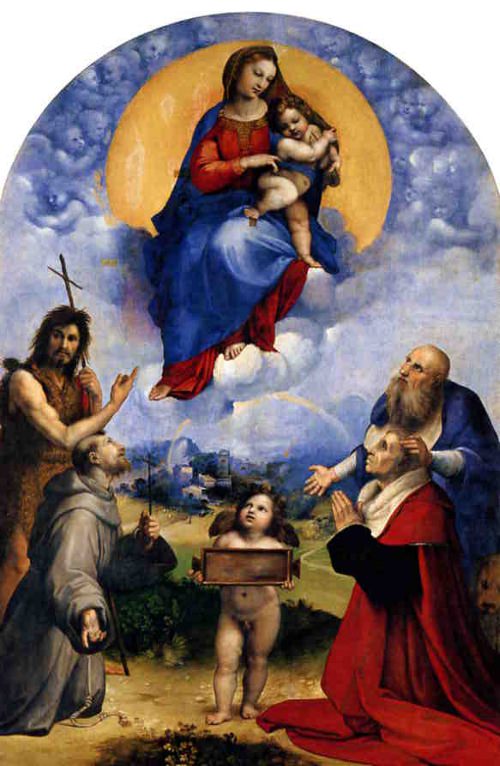
At this time, Raphael was also influenced by the painter Fra Bartolomeo from Tuscany and the two remained on friendly terms, but the influence of Leonardo was apparent in "The Madonna of the Meadow" 1506. Raphael is noted for his many images of the Madonna. The message of purity that the Madonna symbolises is an important one for Christians. The wealthy and important private clients of the Renaissance demanded pictures of the Virgin for their private devotion, a demand that Raphael was eager to satisfy.
The Madonna was a subject that stayed with him throughout his short life, it is remarkable that he was able to offer such diversity, without repetition, in his depictions of the Holy Mother.
Raphael Sanzio's Madonna paintings.
Raphael Sanzio in Rome.
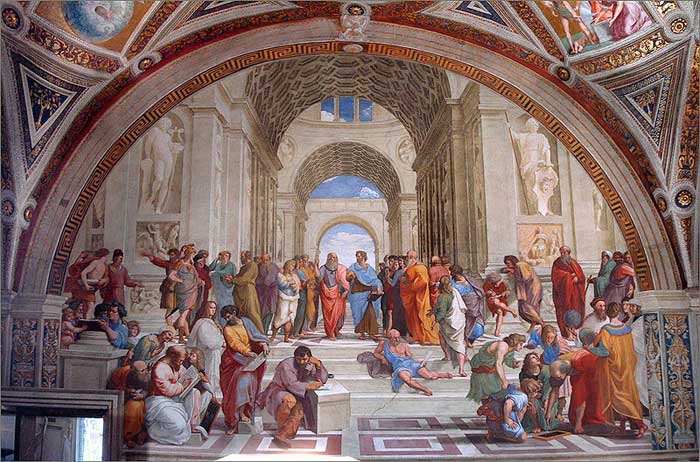
Raphael Sanzio arrived in Rome in 1508 and Pope Julius II soon found work for the young artist. He was asked to decorate the Pope's private library in a selection of rooms known as the Stanze. The paintings include "The School of Athens", "Disputation of the Sacrament" and "Parnassus", all housed in the signature room. These remain among the most famous images produced by the painter.
Popes, Noblemen and Women
Pope Leo X succeeded Julius II on his death, he was a member of the Medici family and continued to act as patron to the artist who painted the Pope's portrait in 1518.
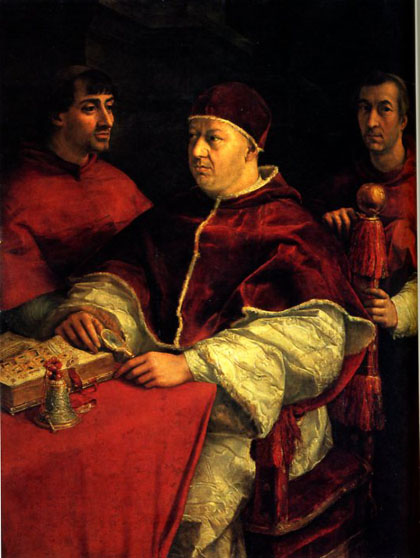
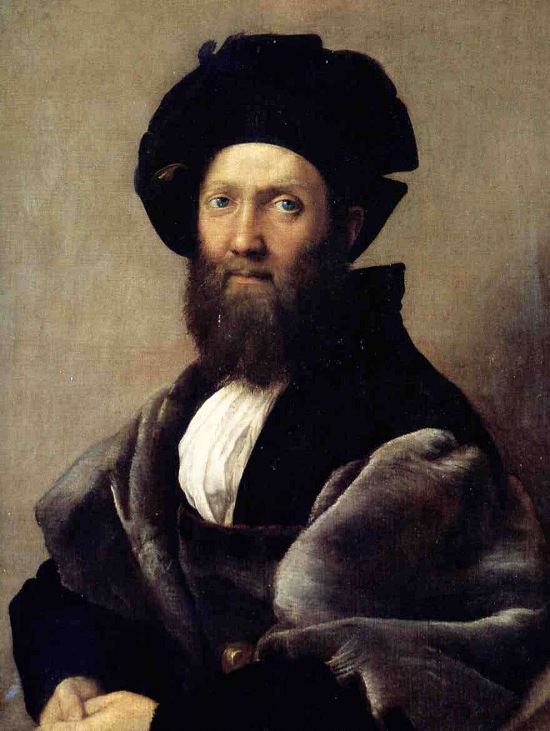
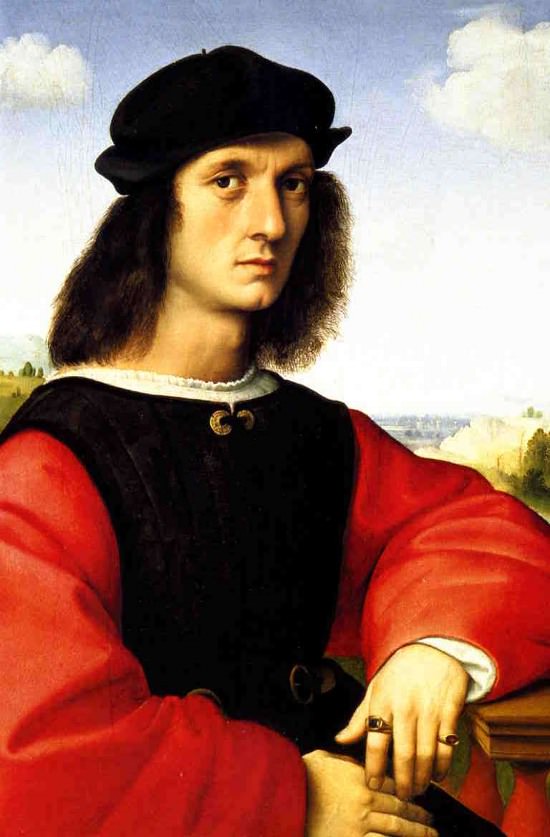
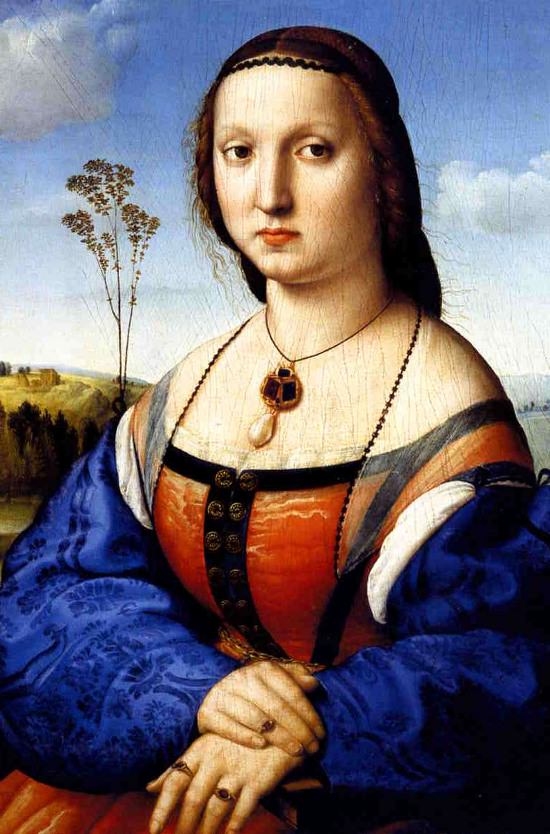
Raphael was much in demand as a portrait painter. He depicted the popes and the wealthy nobility of the time with incredible skill his likenesses give life and personality to his sitters despite his adherence to the standard protocols demanded by his patrons.
Galatea and Ezekiel.
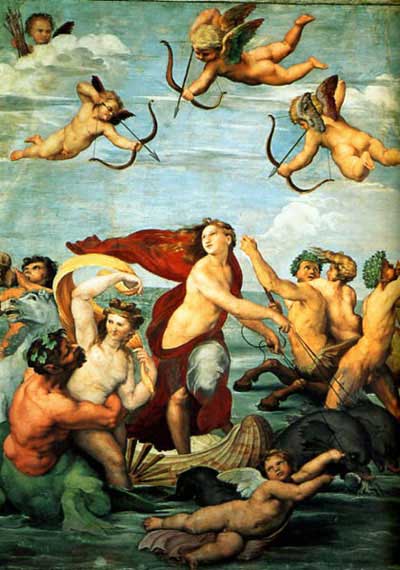
Galatea was painted for the merchant and banker Agosto Chigi who was the wealthiest man in Rome at the time that the painting was commissioned. The work was placed in Chigi's villa on the banks of the Tiber (now named the Villa Farnesina) and was intended to highlight Chigi's position as a major patron of the arts.
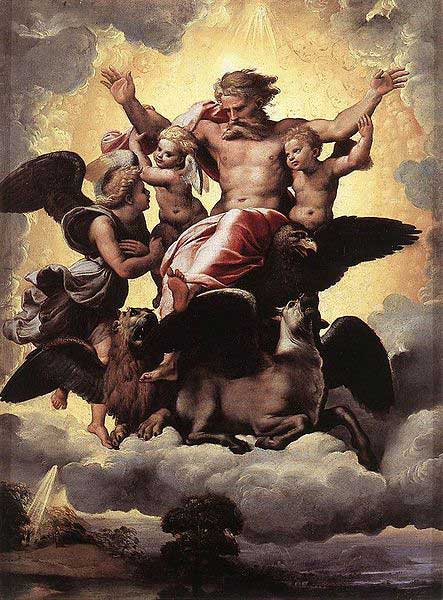
The prophet Ezekiel and his vision is described in the book of Ezekiel. A vision of God the Father appeared to the prophet carried aloft by the symbols of the evangelists, an eagle is accompanied by a lion, an ox, and an angel. In Raphael’s magnificent painting the vision of God fills the main part of the composition riding on a cloud and bathed in a golden celestial light. The arms of God are raised in blessing completing the drama of the composition. Only in a sketch at the bottom of the painting does an earthly landscape appear on which the tiny figure of the prophet stands in awe of the vision before him.
In 1514 the artist was named architect of St Peter's and for a while was the most important architect in Rome. He designed several buildings including the Chigi Chapel in the Church of Santa Maria del Popolo. Unfortunately, his work on St Peter's was demolished when Michelangelo's design became accepted.
Raphael Sanzio died on April 6th, 1520, at the age of 37 and, such was his fame, that the leading scholar of the age, Cardinal Bembo, wrote the epitaph for his tomb. This is Raphael's tomb, while he lived, he made Mother Nature fear to be vanquished by him and, as he died, to die too.
Mini Gallery.
- Home
- Raphael Sanzio

Contact Details. Site Map. Site Author. Art Museums. Privacy policy. News.
© Copyright, 2008-2026, by Vincent Finnan, Italian-Renaissance-Art.com